 Eng
Eng 
 English
 Español
 Português


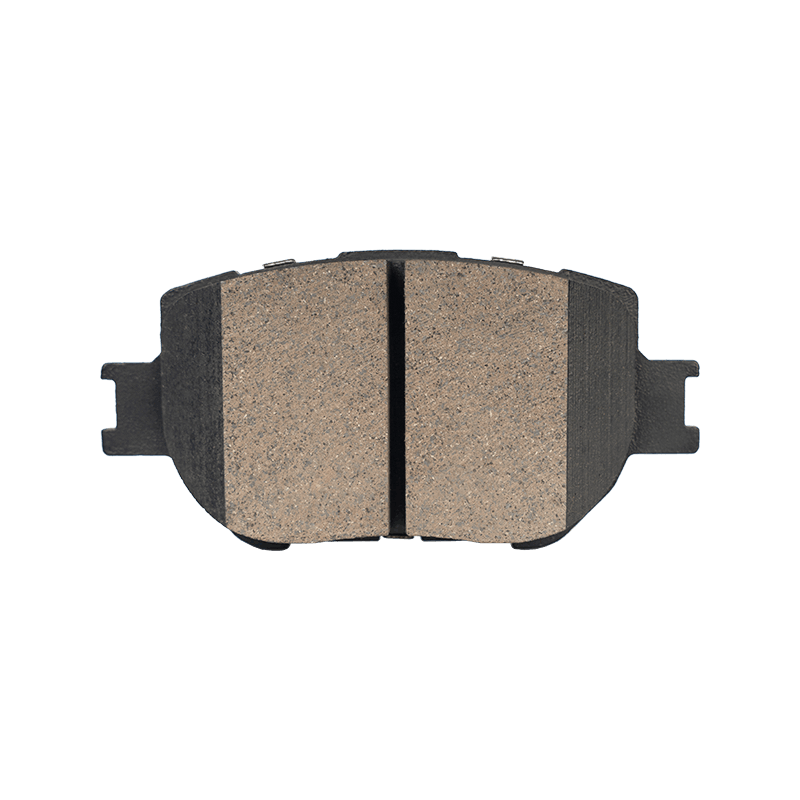
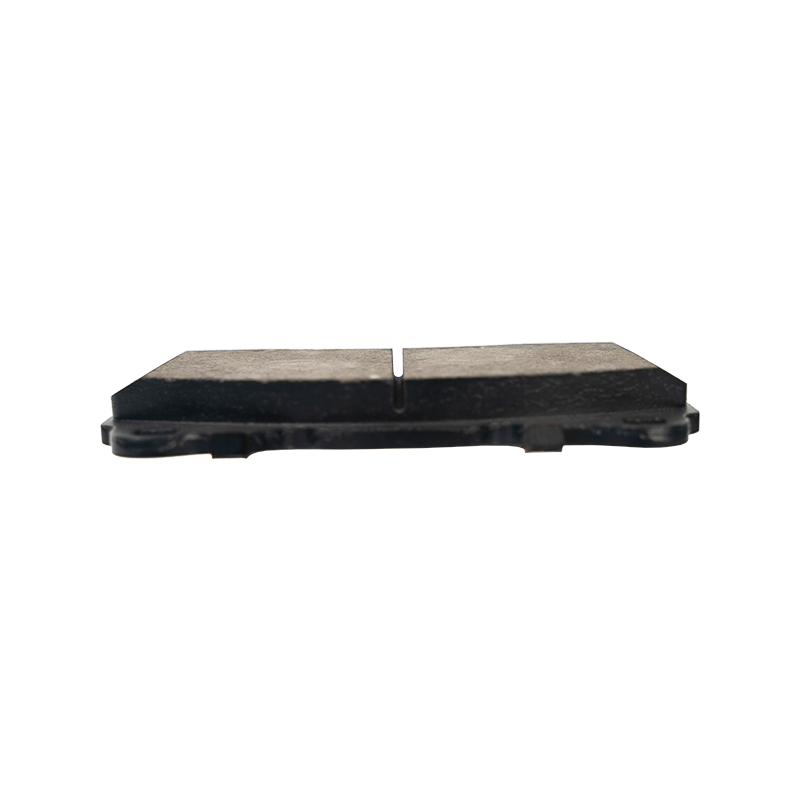
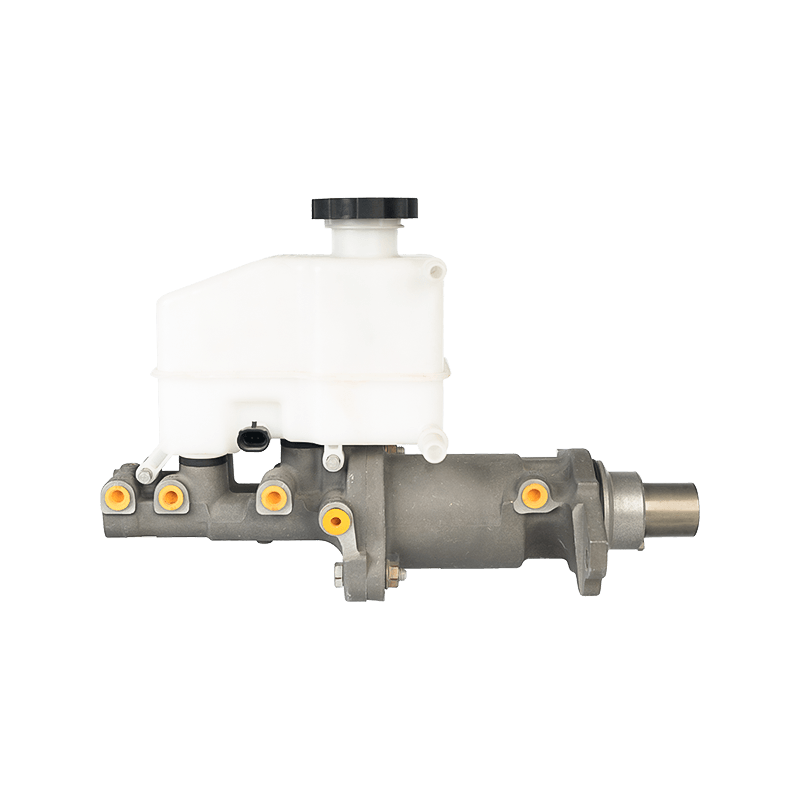
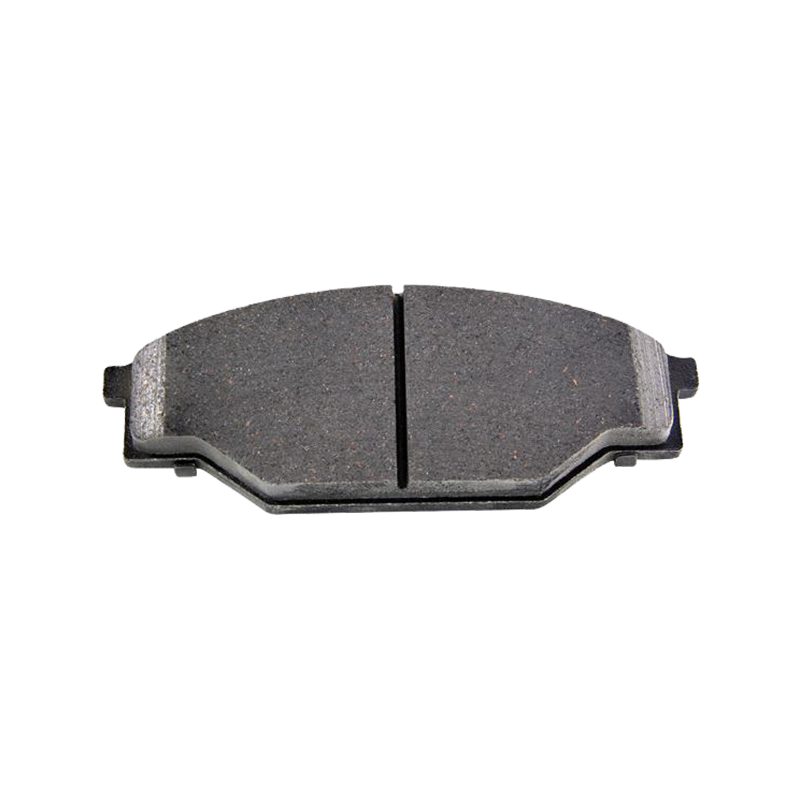
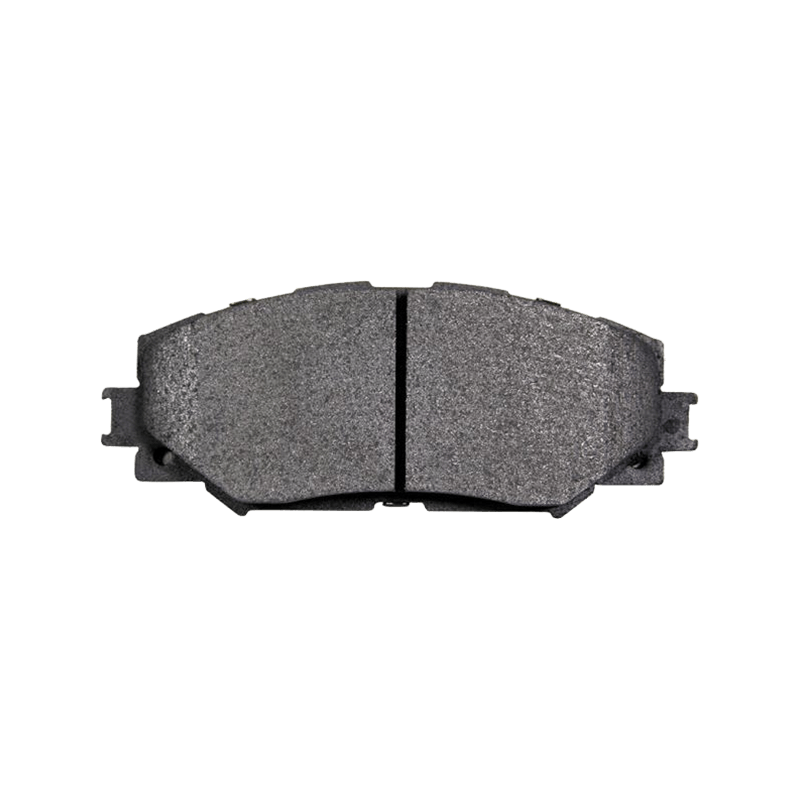
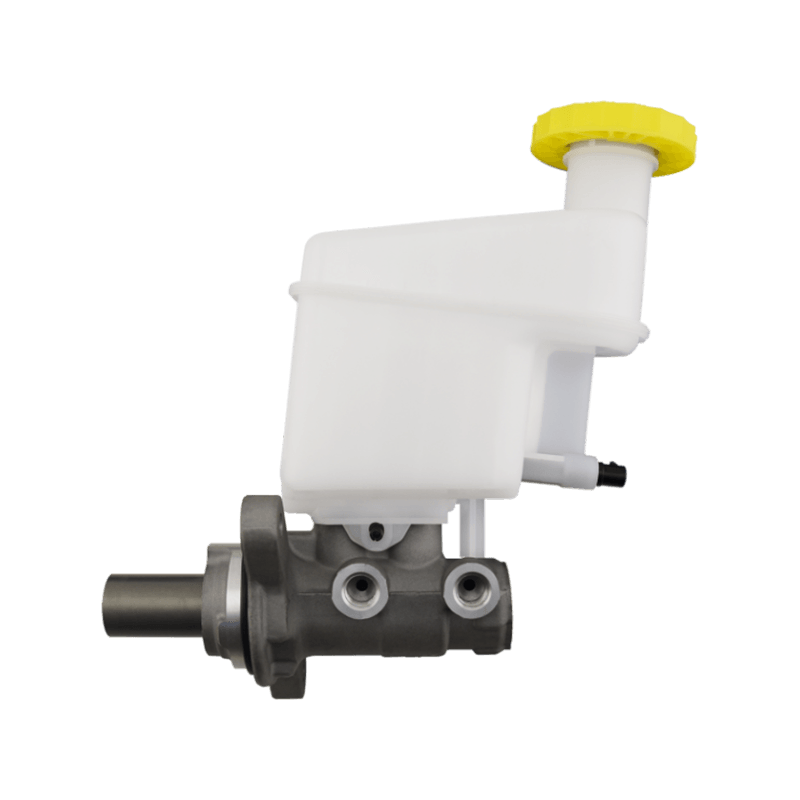
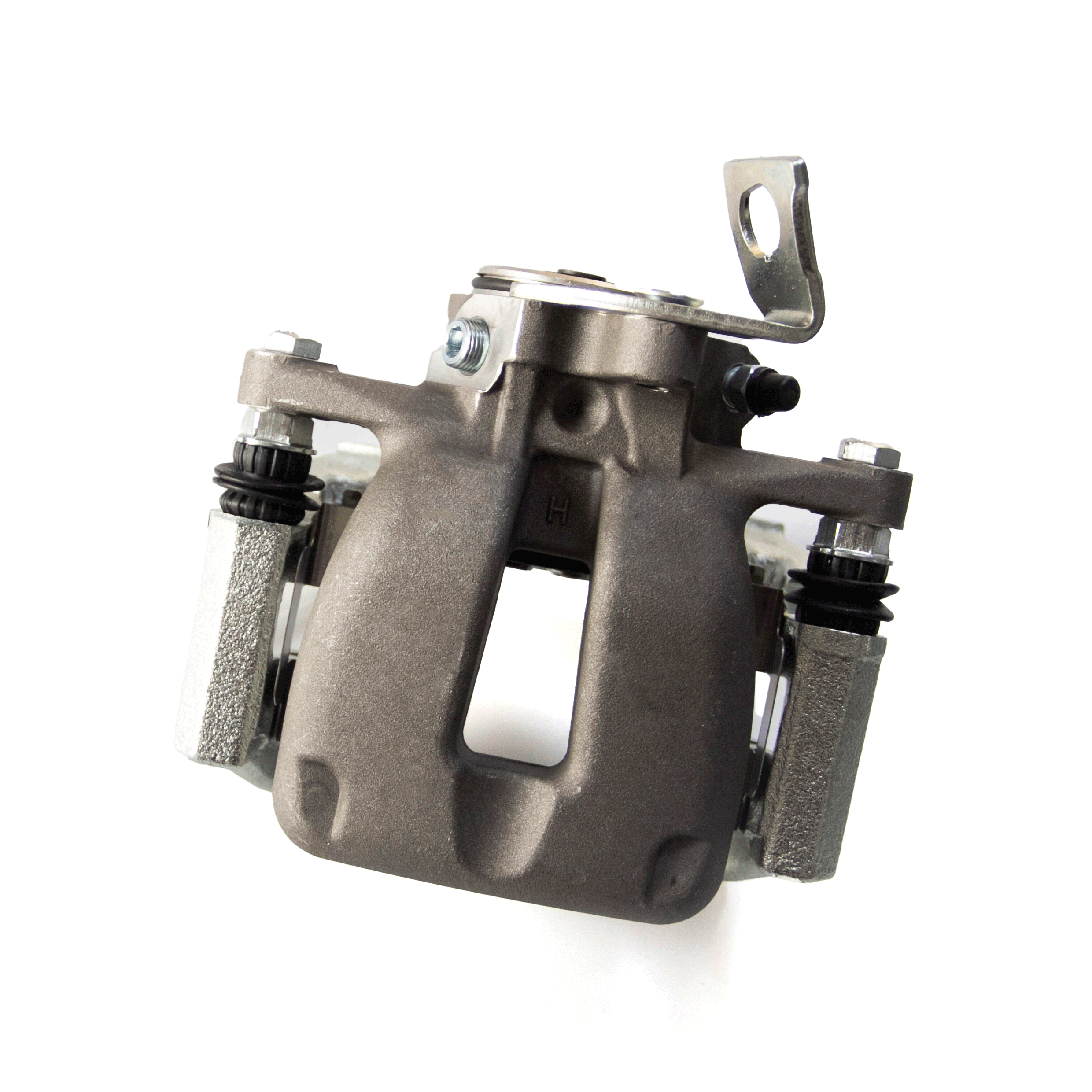
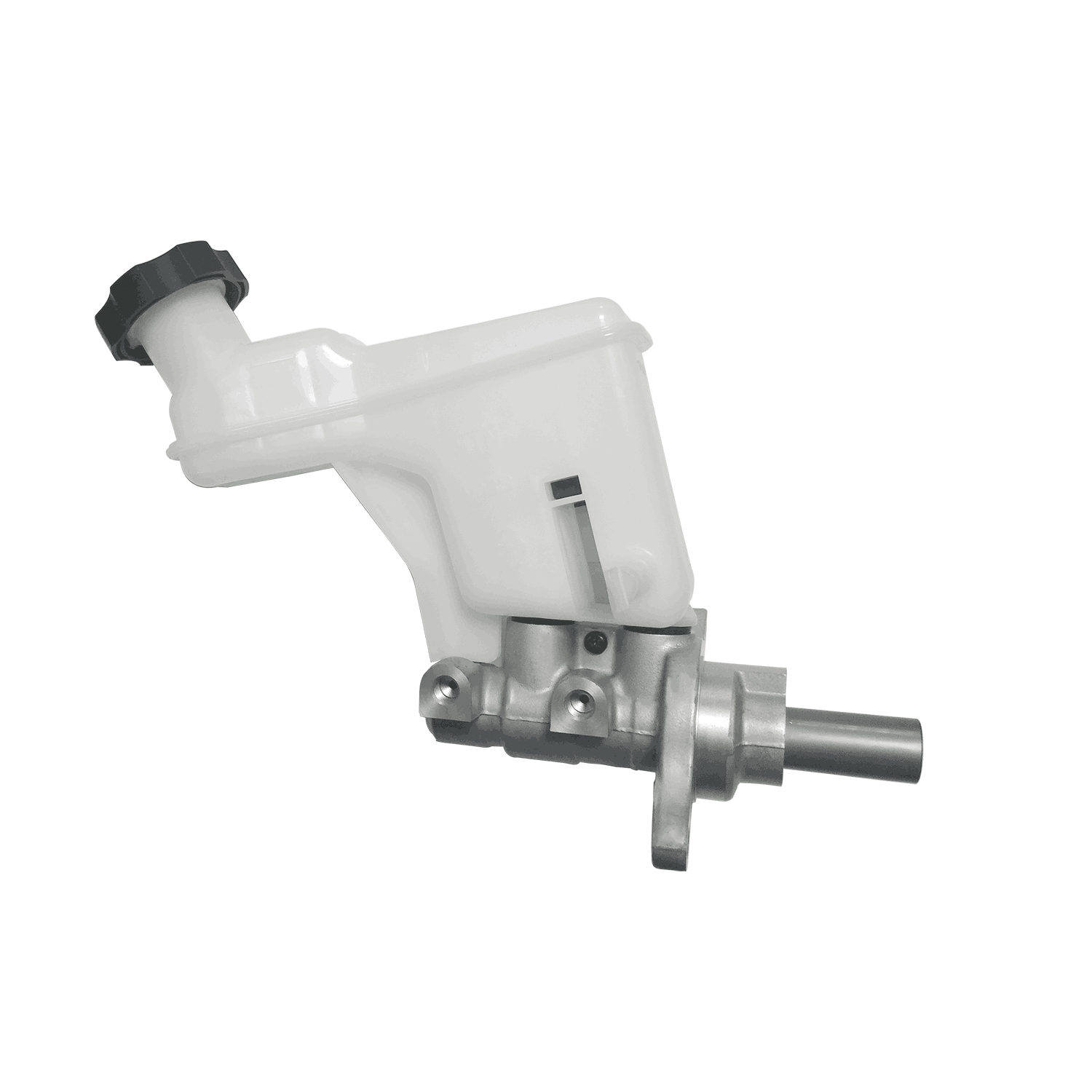
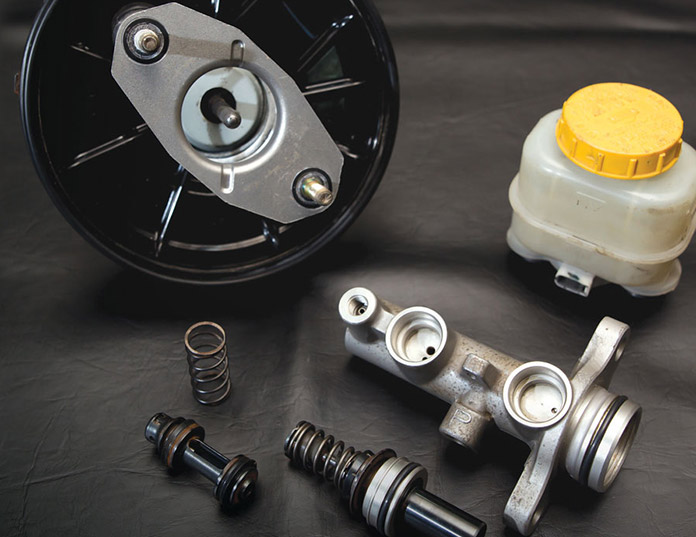
Yancheng Yanitiger Auto Parts Co., Limited is a China 0446530280 High Endurance Brake Pad for Toyota Lexus Suppliers and OEM 0446530280 High Endurance Brake Pad for Toyota Lexus Company, Specializing in brake products manufacturer and our main products including brake master cylinder, brake slave cylinder, clutch master cylinder, clutch slave cylinder, calipers, brake pads and so on. With professional and normative operation, we have developed more than 3,000 models of products to offer our customers more competitive prices and the most efficient and satisfying services.
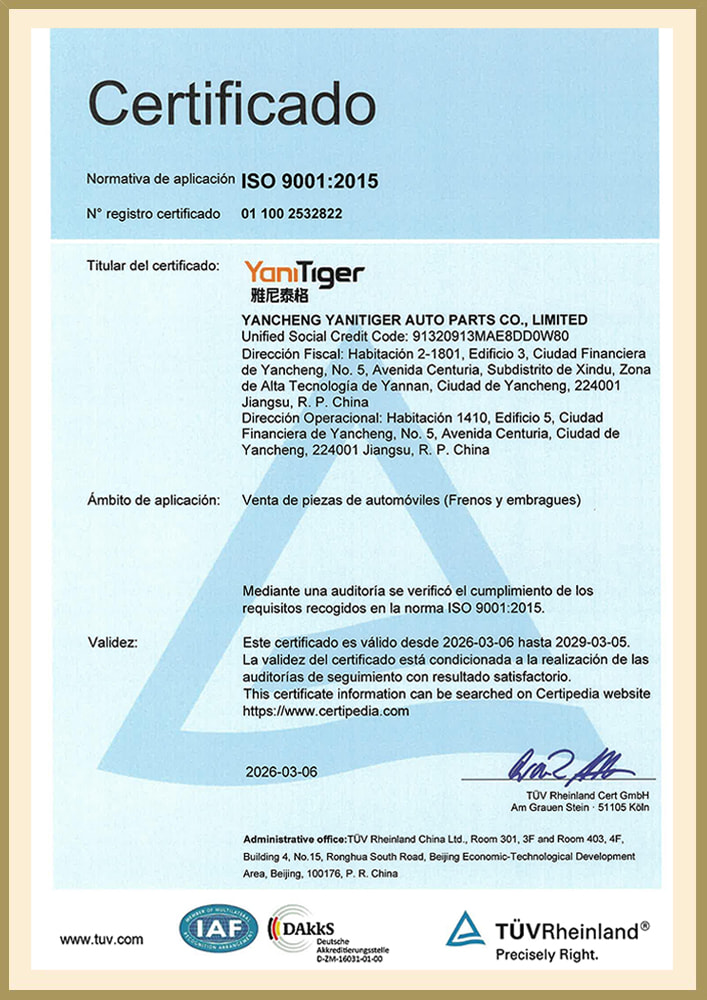
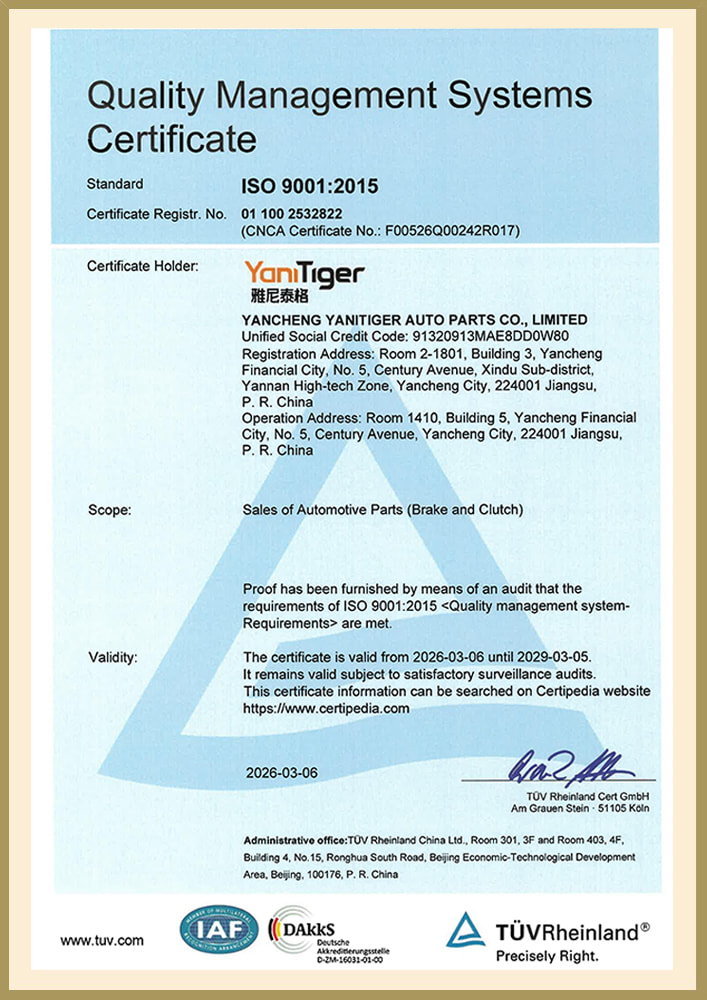
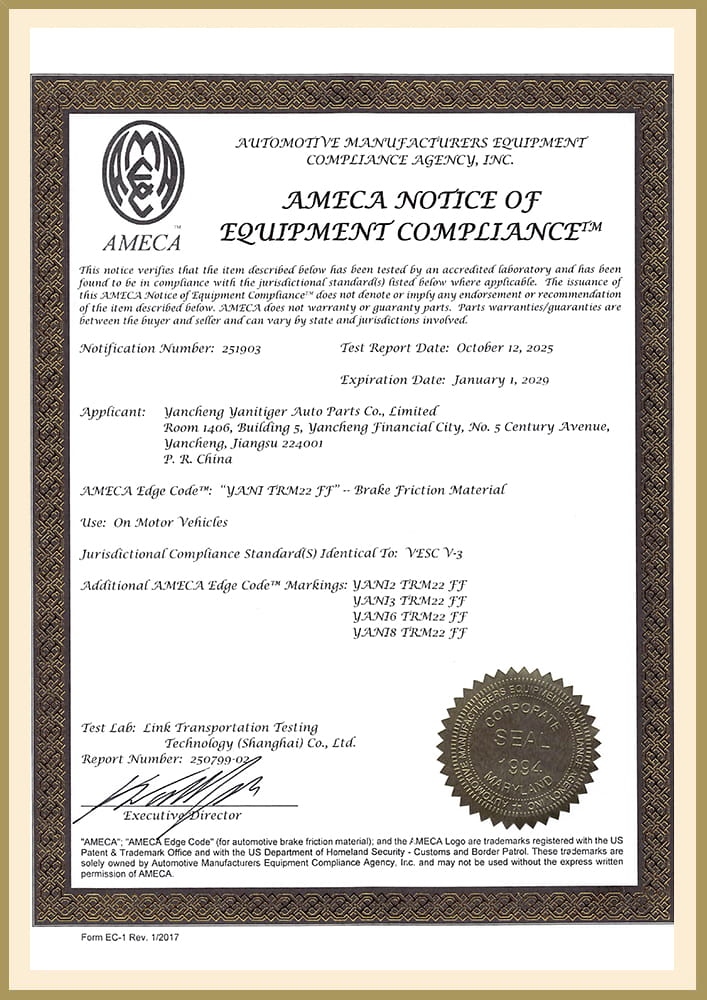
We have more than 1,000 brake shoes and brake pads for European, American, Russian, Japanese and Korean cars. The associated factories have created a highly experienced manufacturing team that exports thousands of auto part products worldwide. High quality and competitive prices are our targets. Our products have gained the certifications of ISO9001 and TS16949. We have built up a solid reputation with our customers in more than 30 countries.
We are looking forward to having a brighter and more successful business in the near future together with all of our clients all over the world.
Welcome To Yancheng Yanitiger Auto Parts Co., Limited Official Website. OE 0446530280 High Endurance Brake Pad for Toyota Lexus Suppliers
 Search
0446530280 High Endurance Brake Pad for Toyota Lexus
|
OE NO |
0446530280 0446520500 04465YZZDF 0446532191 |
|
MODEL |
Toyota Lexus |

Specifications
KEEP IN TOUCH
About Us
Yancheng Yanitiger Auto Parts Co., Limited
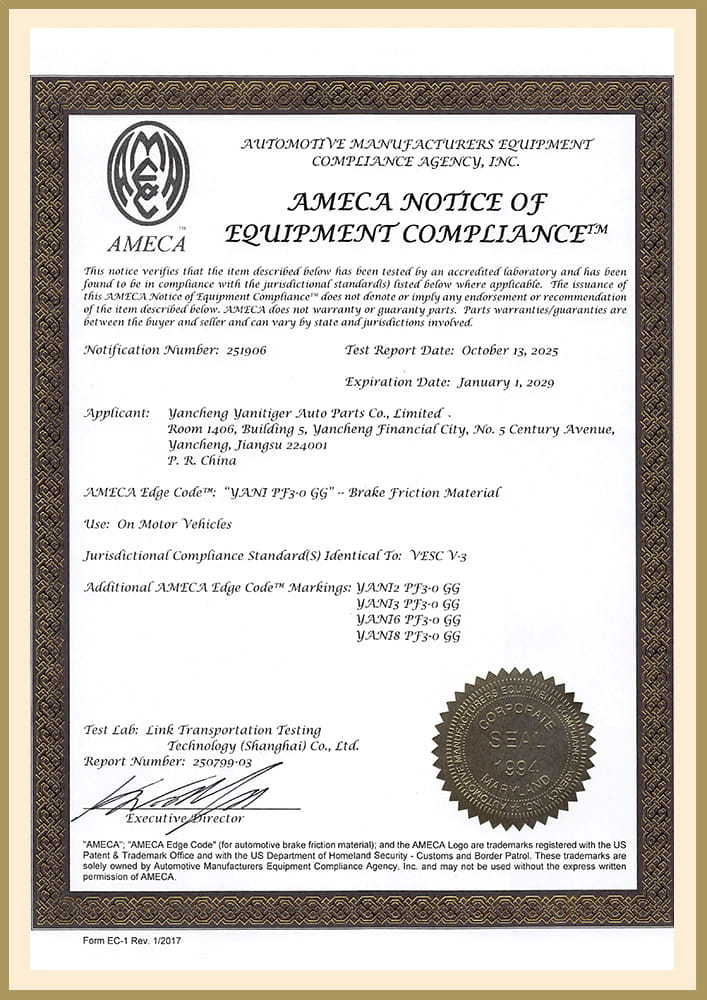
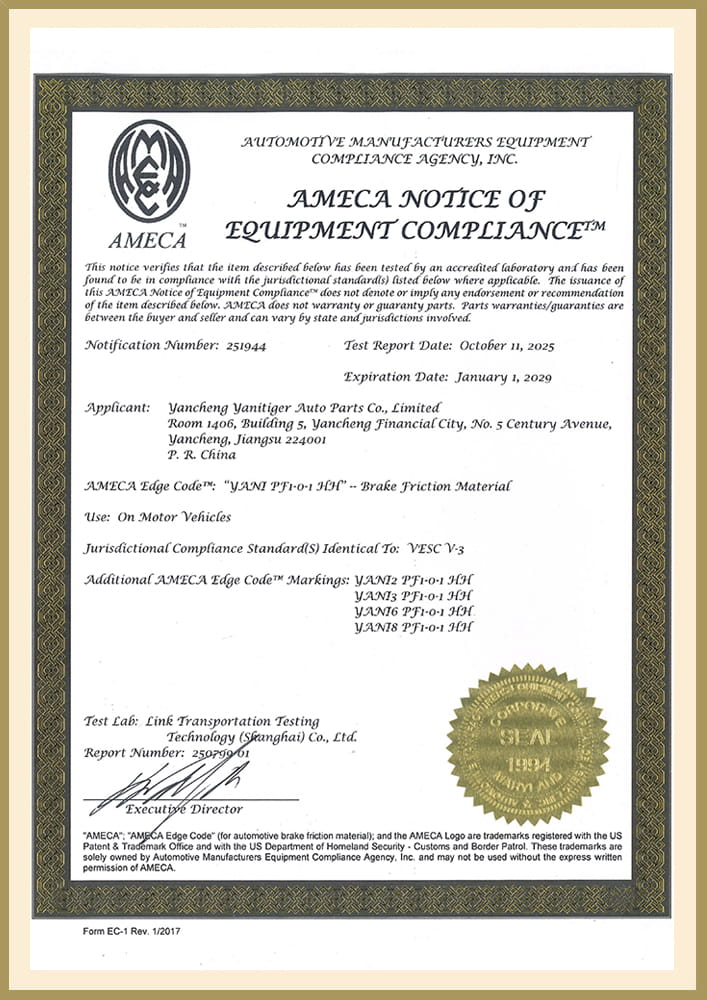
Certificate Of Honor
Newsroom
-
If you have ever wondered how a rear disc-brake car holds itself on a hill without the hydraulic system, the answer lies inside the caliper. Integrat...
READ MORE -
Imagine pressing the brake pedal of an electric vehicle and feeling a calm synthetic resistance — under the pedal there is no master cylinder and no ...
READ MORE -
Answer First: Rear Drum Brakes Are Still Common on Dozens of Models If you are asking "what cars have drum brakes," here is the short answer: most ec...
READ MORE -
Put a new set of front brake pads next to the rear set for the same car, and the difference is hard to miss: the rear pads are visibly shorter across...
READ MORE
Industry Knowledge Extension
0446530280 high durability brake pads have become a key component to ensure driving safety and reduce maintenance costs with the innovation of material technology and process. This product is developed based on semi-metal and ceramic composite technology. By optimizing the ratio of friction materials and structural design, the service life is increased to more than 50,000 kilometers while ensuring braking performance.
Its core technology is reflected in the innovative design of the composite friction layer. The friction material uses modified phenolic resin as the bonding matrix, and incorporates carbon fiber and ceramic microparticle reinforcement phases to form a honeycomb porous structure. This design not only stabilizes the dynamic friction coefficient in the range of 0.38-0.45, but also improves the heat dissipation efficiency through the pore structure. The temperature peak in ten consecutive 100km/h emergency braking tests is 18% lower than that of traditional semi-metal brake pads, effectively avoiding thermal decay. In terms of production technology, 0446530280 adopts two-stage hot pressing molding technology. After the raw materials are precisely proportioned, they are first pre-pressed at 160°C to form a porous skeleton, and then secondary solidification is completed at 230°C under high pressure, so that the material density is increased to more than 98%. The back plate part uses laser-welded high-strength alloy steel, combined with a wavy heat dissipation fin design and a patented vortex guide groove, which can reduce the friction interface temperature from 600°C to 200°C within 90 seconds.
In actual application, the brake pad shows all-weather adaptability. The J-shaped grinding twill and silencer designed on its surface control the braking noise below 42 decibels. At the same time, the contact pressure distribution is optimized through the unequal thickness structure design, and the friction coefficient can still be maintained above 0.35 even on slippery roads in the rainy season. In response to the special needs of the energy recovery system of new energy vehicles, the product optimizes the initial bite response speed, shortens the braking delay time to 0.18 seconds, and reduces dust generation with a low metal formula, effectively extending the wheel cleaning cycle.

CONTACT INFOR.
-
 +86-152 5110 1941
-
 Info@yanitiger.com
-
 +86-152 5110 1941
-
 Building 5, Yancheng Financial City, No. 5 Century Avenue, Yancheng City, Jiangsu Province, China
Copyright © Yancheng Yanitiger Auto Parts Co., Limited All Rights Reserved. Wholesale OE 0446530280 High Endurance Brake Pad for Toyota Lexus Suppliers
