
 en
en
Many customers often have these questions: "Are your brake pads wear-resistant?" "Will they make noise at high speeds?" "How long will they last? Will they damage the brake discs?"
These questions are crucial. Today, we'll start from practical usage scenarios and explain clearly what brake pads are, the characteristics of good brake pads, and what to pay attention to when using them.
1. What are brake pads?
Brake pads are a core consumable component in the braking system.
Simply put: When you press the brake pedal, the brake pads press against the brake disc, using friction to slow the wheels down and eventually bring the vehicle to a stop.
Without brake pads: the car won't stop properly, braking distance increases, and safety risks are maximized.
Whether it's a passenger car, commercial vehicle, truck, or construction machinery, brake pads are an absolutely essential safety component.
2. What are the main types of brake pads?
Many customers ask:
"Is ceramic better or semi-metallic?"
Actually, there is no absolute best, only what suits your vehicle model and intended use.
(1) Semi-metallic brake pads (most commonly used)
Features:
Strong braking force
High temperature resistance
Moderate price
Suitable for:
Commercial vehicles
SUVs
Heavy-duty vehicles
High-frequency braking conditions
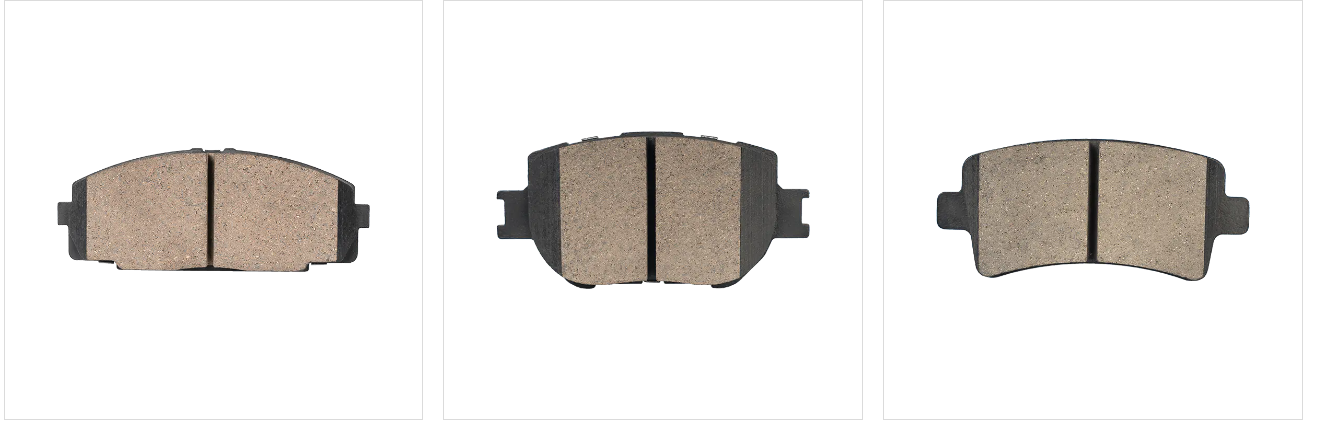
(2) Ceramic brake pads (comfort type)
Features:
Low noise
Less dust
Soft pedal feel
Suitable for:
Family cars
Urban commuting
Users with high comfort requirements
(3) Low-metallic formula
Between the two:
Balanced performance
High cost-effectiveness
Suitable for mainstream market demand.
3. What are the "visible advantages" of good brake pads?
Not the data on the parameter sheet, but what users can actually feel.
(1) Effective and stable braking
The first standard for good brake pads is only one: They provide immediate braking power and do not diminish with continuous braking.
This manifests as: No softness during high-speed braking No failure during continuous downhill braking Fast response during emergency braking
(2) No squeaking
The most common customer complaint is abnormal noise.
High-quality brake pads:
Stable formula
Reasonable noise reduction design
High surface finish
Significantly reduces low-speed squealing noise.
(3) Slow wear and long lifespan
Reasonable wear-resistant material ratio:
Longer service life
Lower replacement frequency
Lower operating costs
(4) Does not damage brake discs
Cheap brake pads are prone to:
Severe disc wear
Scratching the disc surface
Premature disc failure
Good brake pads wear more evenly and are more friendly to the brake discs.