
 en
en
Put a new set of front brake pads next to the rear set for the same car, and the difference is hard to miss: the rear pads are visibly shorter across the backing plate and carry noticeably less friction material. On most passenger cars the answer is a clear yes — rear brake pads are smaller than front pads, and the gap is deliberate.
Front and rear pads are engineered as two separate parts. They differ in height, surface area, shape and sometimes thickness, they carry different part numbers, and they are never interchangeable. Knowing why the rears are smaller helps you order the correct set and read wear patterns more accurately.
Short answer: yes. On most front-engine passenger cars, rear brake pads are smaller than the fronts because the front axle handles roughly 60–70% of the braking work. The two axles use different pad shapes, thicknesses and part numbers, so always buy pads for the exact axle and OE number.
Why the Front Brakes Do the Heavy Lifting
The reason is weight transfer. Under braking, momentum pitches the vehicle forward, compressing the front suspension and pressing the front tires harder into the road. A car that rests with a near 60:40 front-to-rear weight balance can load well over 70% of its weight onto the front axle during a hard stop — and a tire carrying more load offers more grip.
Brake engineers size each axle to use that grip without crossing it. If the rear brakes were as large as the fronts, the lightly loaded rear tires would lock up early, hurting stability and stopping distance. So the front axle is designed to contribute the majority of the braking force — a widely used rule of thumb in brake design puts it at around 60–70% in a typical hard stop — while the rears handle the rest.
The size difference also serves heat management. Because the front pads convert most of the car's kinetic energy into heat, a taller pad and a larger rotor give them more surface area to shed it without fading on repeated stops.
How Much Smaller Are Rear Brake Pads?
"Smaller" shows up in three measurements. Rotor diameter is usually 10–40 mm less at the rear on popular sedans and crossovers, based on typical manufacturer spec sheets. Pad height — the radial depth of friction material — is visibly shorter. And total friction area drops by a third or more, which is exactly what keeps rear braking force below the rear tires' traction limit.
| Feature | Front brakes | Rear brakes |
|---|---|---|
| Pad size (friction area) | Taller and wider — the largest pad on the car | Visibly smaller, often a third or more less area |
| Rotor diameter | Larger, typically by 10–40 mm | Smaller |
| Share of braking work | Roughly 60–70% in a hard stop | Roughly 30–40% |
| Typical wear speed | Faster — usually replaced first | Slower on most cars |
| Extra hardware | None | Often houses the parking brake mechanism |
| Part number | Axle-specific | Axle-specific — never shared with the front |
Many rear calipers also house the parking brake, whether cable-operated or electric. That adds levers, actuators and extra backing-plate clearance to the rear pad design, so rear pads are shaped differently as well as smaller.
What Sits Inside the Wheel: A Disc Brake in Isometric View
Every corner of the car runs the same basic hardware at different sizes. The caliper body straddles the rotor; hydraulic pressure from the master cylinder pushes a piston; the piston presses the inner pad against the rotor face while the reaction force pulls the outer pad in from the other side. Friction between the pads and the spinning rotor converts motion into heat.
Because each axle's caliper is cast in a different size and shape, the pad that fits inside it is unique to that axle. That is why pad catalogs list front and rear applications separately — and why two pads that look almost identical may have different part numbers.
What the Size Gap Means for Wear and Replacement
In general, front pads wear out first. Common service guidance puts front pad life in the 30,000–70,000 mile range, with rears often lasting longer because they do less work every time you stop. New pads start around 10–12 mm thick; once the friction material approaches about 3 mm, replacement is due.
The pattern is not universal. Mountain driving, towing, a sticking rear caliper or a rear-biased brake setup can make those smaller rear pads wear surprisingly fast — some SUV owners report the rears going first. Wear also depends heavily on driving style, traffic and friction material, so it helps to understand what factors influence the wear rate of brake pads before blaming size alone.
Thickness is easy to check through the wheel spokes or during a tire rotation. It pays to know how to determine whether brake pads need to be replaced before the backing plate digs into the rotor and turns a pad job into a rotor job.
If you tow, drive long descents or carry heavy loads, heat is the enemy. A high-carbon, heat-resistant friction compound resists fade on grades where a basic pad would start to glaze and lose bite.
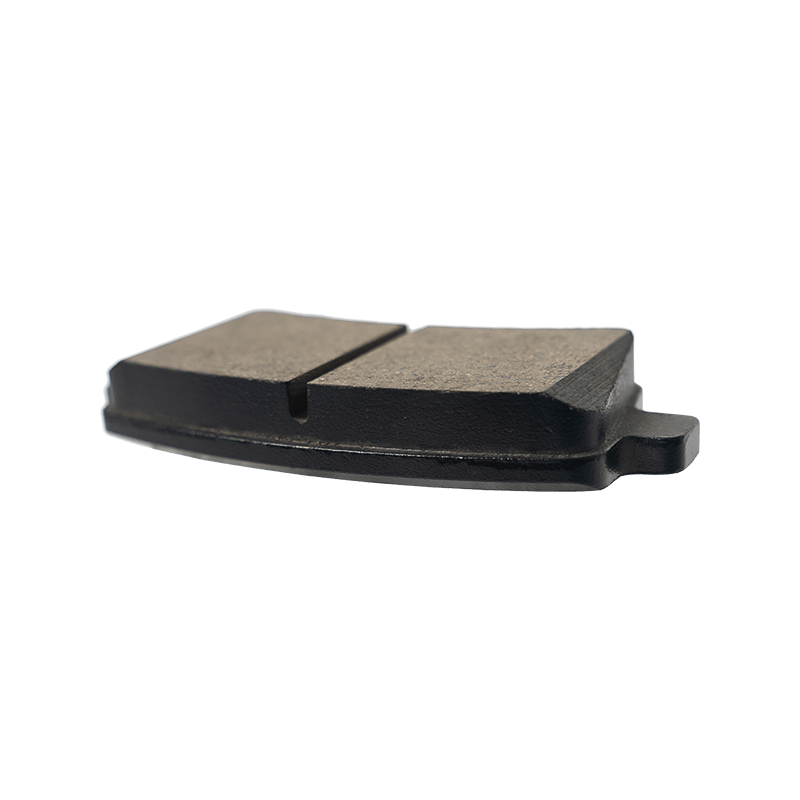 16586609 High Carbon Heat Resistant Brake Pads for Buick CadillacHigh-carbon friction compound built to resist fade under towing, heavy loads and long descents. A fitting pick where the surrounding text warns that heat can glaze basic pads and axle-specific OE numbers must be matched.View Product →
Buying Replacement Pads: Front and Rear Are Never Interchangeable
Because each axle has its own caliper casting, pad part numbers are axle-specific. A front pad will not seat correctly in a rear caliper, and even a close-looking fit would upset the carefully engineered brake balance. Match the OE number on the backing plate, or search by make, model and year in the supplier's fitment catalog.
- Match the OE part number for the exact axle you are servicing.
- Replace pads in pairs across an axle, never one corner at a time.
- Choose friction material to suit the duty cycle, not just the price.
- Bed in new pads with a series of moderate stops and cooling gaps.
- Inspect rotors for scoring or thickness variation whenever pads come out.
For everyday commuting, ceramic friction material stays quiet and keeps wheel dust down, which is why it remains the default choice for most drivers of family sedans and crossovers.
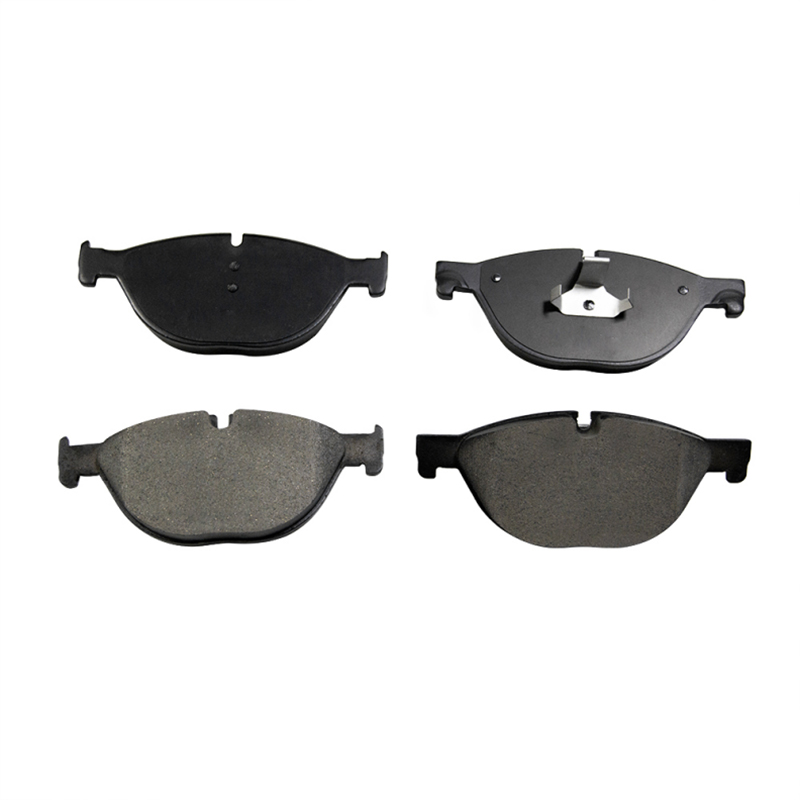 34116851269 34116775318 34116775322 Ceramic Brake PadsCeramic friction material that runs quiet and keeps wheel dust low, matching the everyday commuting focus of the surrounding passage. Verify fitment by OE number before ordering, since pad shapes are axle-specific.View Product →
Drivers who want more bite for spirited road use or hilly routes can step up to an ultra-high-performance disc brake pad, which trades a little dust for a stronger, more consistent friction response under repeated hard stops.
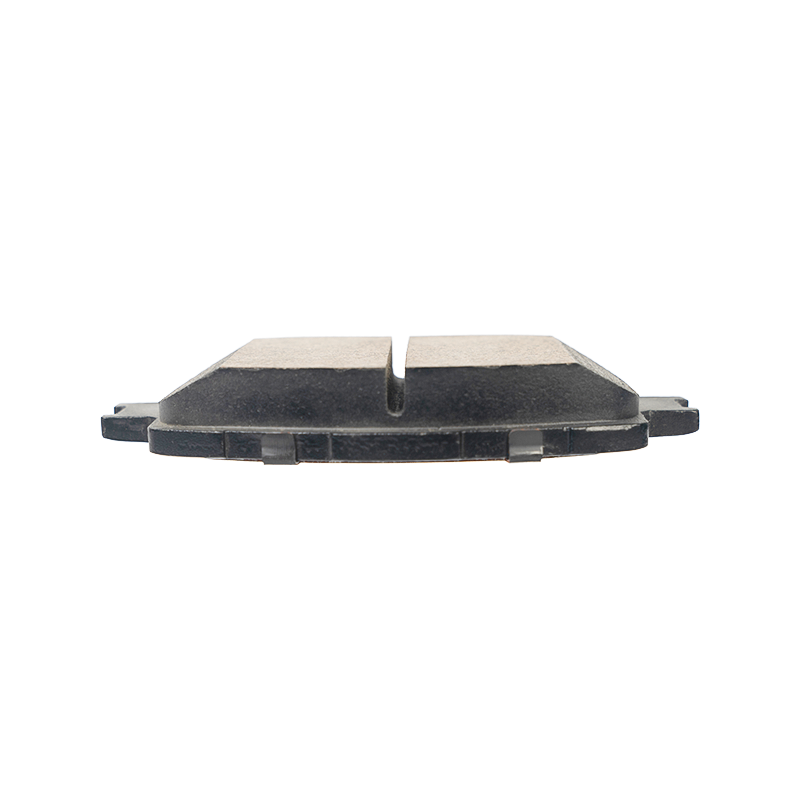 0446526320 Ultra High Performance Disc Brake Pad for ToyotaAn ultra-high-performance pad offering stronger, more consistent friction for spirited driving and hilly routes. Produced to the OE backing-plate profile under ISO 9001 and IATF 16949 certified manufacturing.View Product →
Whichever compound you choose, the pad must mirror the original backing-plate profile to the millimeter — front and rear. As a brake manufacturer whose catalogs cover more than 1,000 brake pad and shoe part numbers for European, American, Japanese and Korean vehicles, we tool every pad to the OE profile under ISO 9001 and IATF 16949 certified production; an example of our published brake pad test report is available for review.
When the Usual Rule Bends
The front-bigger rule holds for the vast majority of sedans, hatchbacks, crossovers and light trucks, but a few cases bend it:
- Rear-driven electric vehicles: regenerative braking handles much of the daily deceleration, so the rear friction pads can work, corrode and wear differently from the fronts.
- Mid-engine and rear-biased performance cars: engineers deliberately enlarge the rear brakes to match the rear axle's share of grip.
- Cars with rear drums: the rear axle uses brake shoes rather than pads, so comparing pad sizes does not apply.
- Heavy towing or consistently loaded use: a loaded rear axle takes a bigger share of braking, which is why fleet spec sheets often uprate rear friction parts.