
 en
en
Answer First: Rear Drum Brakes Are Still Common on Dozens of Models
If you are asking "what cars have drum brakes," here is the short answer: most economy cars, subcompact hatchbacks, and several electric vehicles still use drum brakes on the rear axle. The front axle almost always gets disc brakes, even on the cheapest models, because it handles 60 to 70 percent of total stopping force.
Recent model years of the Toyota Corolla L, Honda Fit, Nissan Versa, Mitsubishi Mirage, Hyundai Venue, and Kia Rio are typical examples of new cars with rear drum brakes. On the EV side, the Fiat 500e and some VW ID.3, ID.4, and ID.Buzz trims also carry rear drums. Knowing which cars have drum brakes is useful when you are comparing maintenance costs, planning an aftermarket upgrade, or buying replacement parts for a fleet.
The key takeaway is that rear drum brakes are not a defect. They are an engineering decision shaped by cost, packaging, and how much work a rear axle actually has to do.
Why Carmakers Still Fit Drum Brakes
Rear drum brakes have been around for more than a century, yet they survive on new vehicles. The reasons are practical and measurable.
The cost per axle is meaningfully lower
For a high-volume model, a rear drum brake package can save an automaker 15 to 25 USD per vehicle compared with a rear disc setup. Multiply that by a production run of 200,000 units and the savings reach millions. Parts buyers see the same pattern when comparing aftermarket prices.
Rear brakes do less work than front brakes
Under normal braking, the rear axle provides 20 to 40 percent of total deceleration force. This means rear brake temperature rises are much lower, so drum brakes do not need the same heat dissipation as front discs. Engineers use the rear axle as a place to save cost without compromising safe stopping distance in real-world driving.
Parking brake integration is simpler with drums
A drum brake can house the parking brake linkage inside the same drum, using a mechanical lever and cable. This removes the need for a separate parking brake caliper or motor, saving weight and complexity on small cars.
Electric vehicles are bringing drum brakes back
EVs rely on regenerative braking for most deceleration, which keeps the rear friction brakes relatively cool and rarely used. Once the motor does the heavy lifting, drums become a rational choice for rear axles. That is why several new EVs, including the Fiat 500e and VW ID. models, still ship with rear drums instead of disc brakes.
The master cylinder is the hydraulic pump that feeds the rear wheel cylinders through the brake lines. A high-quality master cylinder keeps pressure delivery consistent, which matters even more when the rears are drums.
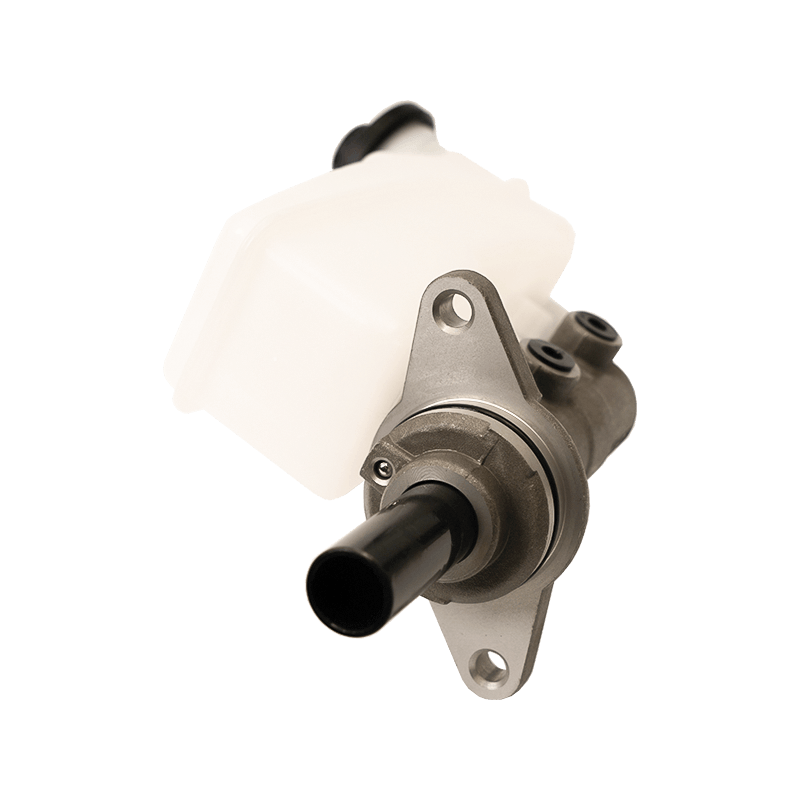 Brake Master Cylinder for Toyota Hilux GGN15 25 35This master cylinder supports consistent hydraulic pressure for rear drum brake systems, fitting Toyota Hilux models from 2004 to 2008, ensuring reliable brake fluid delivery.View Product →
Which Cars Have Drum Brakes? A Segment-by-Segment Look
The list below gives you a practical reference for the most common models with rear drum brakes. Trim level matters: a higher trim of the same car often upgrades to rear discs.
| Segment | Model examples | Rear brake type | Notes |
|---|---|---|---|
| Subcompact hatchback | Mitsubishi Mirage, Kia Rio, Chevrolet Spark | Drum | Standard on most trims |
| Compact car | Toyota Corolla L, Honda Fit, Nissan Versa | Drum | Lower trims; higher trims use discs |
| Small SUV / crossover | Hyundai Venue, Mazda2-based models | Drum | Base trims in some markets |
| Electric vehicle | Fiat 500e, VW ID.3 / ID.4 / ID.Buzz | Drum | Regenerative braking lowers heat load |
When you service one of these models, the brake wheel cylinder is usually the first internal part to fail because it is exposed to brake fluid, dirt, and repeated hydraulic pressure.
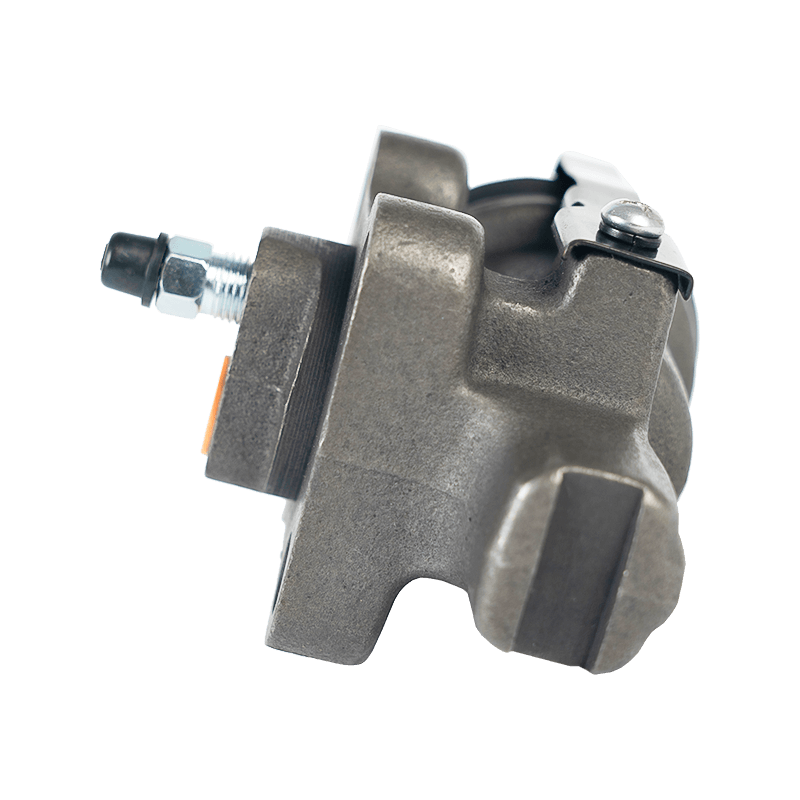 Brake Wheel Cylinder for Toyota Drum Brake SystemsDirect-fit wheel cylinder for Toyota and Asian platforms, designed with correct bore size and mounting style to replace worn components exposed to brake fluid and pressure.View Product →
Choosing the right wheel cylinder depends on bore size, mounting style, and the exact OEM application. For drum brake systems on Toyota and other Asian platforms, a direct-fit wheel cylinder eliminates the guesswork that often comes with generic replacement parts.
How Drum Brakes Work: A Look Inside
A drum brake works by expanding brake shoes against the inner surface of a rotating drum. The drum is bolted to the wheel hub, while the shoes, springs, and wheel cylinder are mounted on a stationary backing plate.
When you press the brake pedal, hydraulic pressure from the master cylinder enters the wheel cylinder. The wheel cylinder extends its two pistons, pushing the brake shoes outward. The friction lining on the shoes rubs against the drum, converting kinetic energy into heat. A return spring pulls the shoes back when the pedal is released.
Two features make drum brakes reliable in service:
- Self-energizing action: the rotation of the drum helps pull the leading shoe against the drum, increasing braking force without extra pedal effort.
- Automatic adjuster: a star wheel mechanism keeps the gap between the shoe lining and drum within a tight tolerance as the lining wears.
That self-energizing effect is one reason drums are more sensitive to adjustment than disc brakes. A properly adjusted drum brake holds a consistent pedal feel and even shoe wear.
Drum Brakes vs Disc Brakes: What the Data Shows
For a shop owner, fleet purchaser, or DIY mechanic, the real question is not "are drums good?" but "what are the trade-offs in my use case?" The radar chart below compares typical characteristics of rear drum and rear disc brakes.
The chart is a relative comparison based on common industry experience, not a lab measurement. Drums win on purchase cost, parking brake integration, and service simplicity; discs win on weight, heat dissipation, and wet-weather performance.
Where rear drums still make sense
- Budget-oriented cars where the rear axle rarely gets hot.
- EVs where regenerative braking replaces most friction braking.
- Rear axles of commercial vans and light trucks that need a simple, robust parking brake.
When you should insist on discs
- Heavy towing or mountain driving where rear heat builds up quickly.
- Performance and track use that demands consistent fade resistance.
- Wet climates where disc brakes shed water faster and brake more predictably.
If you run a mixed fleet, remember that rear drums last longer in city traffic but need more time to adjust after a brake-shoe replacement. Once the linings bed in, they deliver quiet, stable performance.
Maintenance and Replacement: What Parts Buyers Need to Know
Drum brakes are simple but not maintenance-free. The two most important service items are the brake shoe lining and the wheel cylinder. In our aftermarket experience, wheel cylinder leaks and worn shoe linings cause most drum brake complaints.
Here is a useful sequence for inspecting a drum brake:
- Lift the vehicle and remove the drum. Check the inside for deep grooves or cracked friction lining.
- Inspect the wheel cylinder for brake fluid around the rubber boots. A small stain can mean a failing seal.
- Check the return springs and adjuster for corrosion. Rust on the adjuster prevents the shoes from staying at the correct gap.
- Measure the shoe lining thickness. If it is under 1.5 mm, replace the shoe set.
- Clean the drum dust with an approved brake cleaner. Never blow it out with compressed air because brake dust is an inhalation hazard.
When the shoes are good but the hydraulics are weak, the usual culprit is a leaking wheel cylinder. Our guide on early brake wheel cylinder failure covers the warning signs in detail.
Brake pads and brake shoes are not the same part. If you work on vehicles that use rear drums, you will still need disc brake pads for the front axle. High-quality pads reduce dust and noise and keep the pedal consistent.
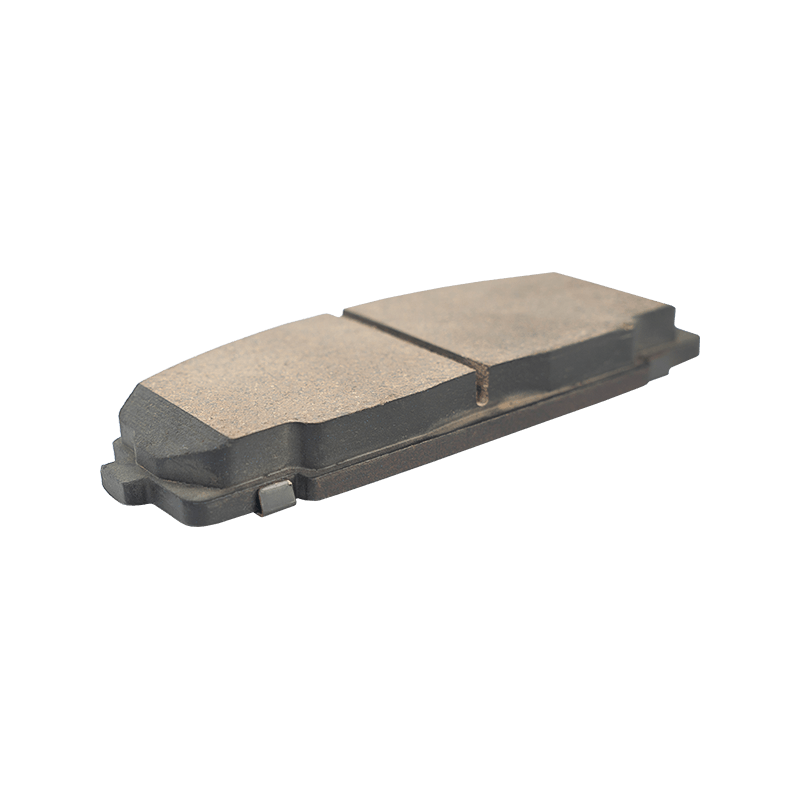 Front Brake Pads for Toyota with Low Dust and NoiseHigh-quality ceramic brake pads for the front axle, offering stable friction across temperatures and reduced dust and noise for daily driving, compatible with Toyota models.View Product →
For the front axle, the brake pad compound matters more than the pad shape. Look for a pad with stable friction over a wide temperature range and low noise characteristics. That covers 95 percent of daily driving scenarios.
Frequently Asked Questions About Drum Brakes
Lower trims of economy cars like the Toyota Corolla, Honda Fit, Nissan Versa, Mitsubishi Mirage, and Kia Rio, plus some EVs such as the Fiat 500e and VW ID.4. Rear drums are the most common configuration.
No. Discs dissipate heat better and brake more predictably in wet conditions. Drums cost less, integrate a parking brake easily, and work fine on rear axles in light-duty or EV use.
Typically 50,000 to 70,000 miles under normal use. Rear drums tend to last longer than front disc pads because the rear axle supplies less braking force.
Yes, with a complete conversion kit that includes calipers, rotors, brackets, and parking brake cables. It is not a simple bolt-on swap and should be done by a specialist.
Dust between the drum and shoe linings, worn linings, or a loose adjuster are the usual causes. Remove the drum and inspect the lining and wheel cylinder.
A rear axle set of shoes, hardware, and wheel cylinders typically costs 150 to 300 USD in parts. Labor adds 80 to 200 USD depending on the vehicle.