
 en
en
Quick Answer: What to Know Before Buying Brake Components Wholesale
Before buying automobile brake system components in wholesale quantities, the most important things to confirm are vehicle compatibility, material quality, manufacturing consistency, whether the supplier can support OEM or custom requirements, and how well the supplier documents export and technical information. Brake parts are safety-critical, so checking these details before placing a bulk order helps avoid fitment problems, inconsistent quality between production batches, and delays once the parts reach their destination market.
The list below summarizes the ten areas covered in this guide, and each one is explained in more detail further down the page.
- Understand the basic layout of an automobile brake system before comparing suppliers.
- Confirm vehicle make, model, and regional compatibility for every part number.
- Evaluate the materials used in castings, pistons, and friction components.
- Compare hydraulic and mechanical component requirements for your target vehicles.
- Assess manufacturing consistency and how batch-to-batch quality is controlled.
- Ask about OEM and custom brake component capability for special applications.
- Separate commercial vehicle needs from passenger vehicle needs where relevant.
- Understand typical wear patterns so replacement stock matches real demand.
- Compare suppliers across several factors rather than a single measure.
- Review supplier experience, export history, and documentation practices.
Understand the Automobile Brake System Basics
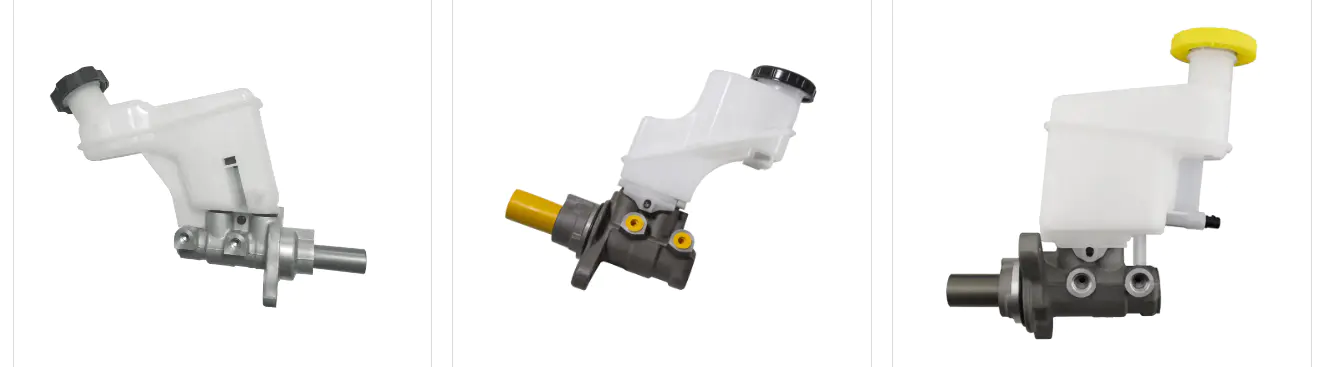
An automobile brake system is the group of components that work together to slow or stop a vehicle by converting the motion of the wheels into heat through friction. Most passenger vehicles use a hydraulic system, where pressing the brake pedal pushes fluid through the master cylinder and brake lines to the calipers or wheel cylinders at each wheel, which then press the brake pads or shoes against a rotor or drum.
Buyers sourcing brake components wholesale generally need to understand this layout well enough to ask informed questions about part compatibility, since a single vehicle platform may use several different caliper, rotor, and pad combinations across trims and production years.
Main Components at a Glance
- Master cylinder, which converts pedal force into hydraulic pressure
- Brake lines and hoses, which carry pressurized fluid to each wheel
- Calipers or wheel cylinders, which press the friction material against the rotor or drum
- Brake pads or shoes, the friction material that contacts the rotor or drum
- Rotors or drums, which rotate with the wheel and absorb the braking heat
Confirm Vehicle Make and Model Compatibility
One of the most common issues in automotive brake parts wholesale purchasing is assuming that a part number will fit a broader range of vehicles than it actually does. Brake shoes, pads, calipers, and cylinders are often produced for specific vehicle platforms, and small differences between trim levels, production years, and regional specifications can change which part is correct.
Buyers working across multiple export markets often need coverage for European, American, Russian, Japanese, and Korean vehicle platforms, since each region tends to favor different vehicle brands and generations. Cross-referencing part numbers against original equipment references, rather than relying on a general vehicle description alone, is a practical way to reduce the risk of ordering the wrong component in bulk.
Evaluate Material Quality and Component Construction
Brake system components are manufactured from a range of materials, each suited to different parts of the assembly. Cast iron remains common for rotors and drums because of its heat resistance and wear characteristics, while aluminum alloy is frequently used for caliper bodies and certain cylinder housings to help reduce overall weight. Stainless steel is often selected for components exposed to moisture and corrosion, copper alloy is used in specific fittings and bushings, and composite materials appear in friction formulations and certain housing components.
When reviewing a wholesale quote, it is worth asking which materials are specified for each part number rather than assuming uniform construction across an entire catalog, since material choice directly affects durability, weight, and how the component performs under repeated heat cycles.
Compare Hydraulic and Mechanical Brake Components
Most modern automobile brake systems rely primarily on hydraulic actuation, using a brake master cylinder and, in many designs, a brake slave cylinder or caliper piston to transmit pedal force through pressurized fluid. A hydraulic brake system manufacturer typically produces master cylinders, slave cylinders, calipers, and related seals as a coordinated product family, since these parts must work together within a specific pressure range.
Mechanical linkages still appear in some parking brake systems and in certain clutch actuation setups, where a clutch master cylinder and clutch slave cylinder perform a similar hydraulic function for the clutch pedal rather than the brake pedal. Buyers sourcing wholesale should confirm whether a vehicle platform uses a fully hydraulic layout or a hybrid arrangement with a mechanical parking brake component, since this affects which parts need to be included in a complete kit.
Assess Manufacturing Consistency and Quality Control
Consistency between production batches is one of the most practical concerns in wholesale sourcing, since a wholesale order may combine parts from several production runs. The chart below presents a relative, illustrative comparison between what buyers often expect from an established automotive brake system manufacturer versus an unverified small-scale supplier.
The comparison table below adds more detail to these same four considerations, since each one affects how smoothly a wholesale order moves from quotation to delivery.
| Consideration | Established Manufacturer | Unverified Small-Scale Supplier |
|---|---|---|
| Material Traceability | Documented material sourcing per component | Limited or inconsistent documentation |
| Vehicle Compatibility Documentation | Clear cross-reference part number lists | Vague or incomplete fitment information |
| Production Capacity and Consistency | Stable output across large batches | Variable quality between small production runs |
| Export and Shipping Experience | Established packing and shipping practices | Limited experience with international orders |
Understand OEM and Custom Brake Component Capabilities
Many wholesale buyers eventually need parts beyond a standard catalog listing, whether for a niche vehicle model, a private-label program, or a specific technical variation. An OEM brake system supplier that also operates as a custom brake components supplier can typically support these requests by adjusting dimensions, mounting details, or packaging to match a customer specification, provided the request is communicated clearly with technical drawings or sample parts.
When evaluating this capability, it helps to ask how the supplier handles engineering changes, how new custom part numbers are validated before full production, and how long a typical development cycle takes from drawing approval to first sample parts.
Consider Commercial Vehicle vs Passenger Vehicle Needs
Passenger vehicle brake components and commercial vehicle brake components are often built to different duty cycles. A commercial vehicle brake system supplier typically designs calipers, drums, and friction materials for heavier loads, more frequent stop-and-go cycles, and higher sustained heat exposure compared with standard passenger car applications.
Buyers sourcing for mixed fleets, including trucks, vans, and passenger cars, should confirm that a supplier can support both duty categories rather than assuming a single product line covers every vehicle type equally well.
Brake Component Wear Patterns Buyers Should Understand
Front and rear brake components typically wear at different rates, since front brakes generally handle a larger share of the braking load during normal driving. The line chart below illustrates a general, non-exact wear trend for front and rear pads across increasing mileage intervals.
Because front components often reach replacement condition sooner, wholesale buyers restocking for general repair demand frequently need a higher ratio of front pads and rotors compared with rear components, though the exact ratio depends on the vehicle types being serviced.
Comparing Suppliers Across Multiple Factors
No single factor tells the whole story when evaluating a wholesale supplier. The radar chart below brings six factors together at once for a broader comparison between an established manufacturer and an unverified supplier.
Viewed together, these factors suggest that established suppliers tend to hold an advantage across most of the areas that matter for a smooth wholesale relationship, while unverified suppliers may still be workable for very small trial orders where the buyer can closely inspect each batch before committing to a larger purchase.
Review Supplier Experience and Export History
A supplier with a long operating history as a brake assembly supplier or brake system components manufacturer has typically encountered and resolved many of the common issues that arise in international wholesale trade, including customs documentation, packaging for long-distance shipping, and communication across time zones. A China automotive brake supplier that regularly exports to multiple regions often has established processes for handling these logistics smoothly.
Asking for references from existing customers in a similar region, or reviewing how long the supplier has served a given export market, can offer useful insight beyond what a product catalog alone can show.
How to Select an Automotive Brake System Supplier
The following steps outline a practical approach to narrowing down supplier options for a wholesale brake component order.
- List the specific vehicle models and part types needed, including any regional variations.
- Request cross-reference part number documentation to confirm fitment accuracy.
- Ask about material specifications for castings, pistons, and friction components.
- Discuss production capacity and typical batch consistency practices.
- Confirm whether OEM or custom brake component development is available if needed.
- Review export experience, packaging methods, and communication responsiveness before finalizing an order.
About Yancheng Yanitiger Auto Parts Co., Limited
Yancheng Yanitiger Auto Parts Co., Limited is a China-based automotive brake components manufacturer specializing in brake master cylinders, brake slave cylinders, clutch master cylinders, clutch slave cylinders, calipers, brake pads, and related brake system parts. The company has developed several thousand product models to support a wide range of vehicle applications, including brake shoes and brake pads suited to European, American, Russian, Japanese, and Korean vehicle platforms.
As an automotive brake system manufacturer with an established production team, Yancheng Yanitiger Auto Parts Co., Limited supports customers across many countries with an expanding model range and ongoing product development. The company also functions as a custom brake components supplier, working with customers on OEM-oriented brake system solutions tailored to specific vehicle applications and export requirements.

Frequently Asked Questions
|
Q1: What are the 5 main parts of a brake system The main parts are the master cylinder, brake lines and hoses, calipers or wheel cylinders, brake pads or shoes, and rotors or drums, which together convert pedal force into stopping power. |
Q2: How many types of automobile brake systems are there The two most common types are hydraulic disc brake systems and drum brake systems, with many vehicles using disc brakes at the front and either disc or drum brakes at the rear. |
|
Q3: Difference between ABS and traditional brakes A traditional hydraulic brake system relies purely on pedal-applied pressure, while an ABS-equipped system adds sensors and a control module that modulate pressure at each wheel to help prevent wheel lockup during hard braking. |
Q4: Why do automotive brake systems fail Common causes include worn friction material, fluid leaks, contaminated brake fluid, corroded components, and wear items that were not replaced within a reasonable service interval. |
|
Q5: What materials are used in brake system components Common materials include cast iron, aluminum alloy, stainless steel, copper alloy, and composite materials, each selected for specific parts based on heat resistance, weight, and corrosion resistance needs. |
Q6: How to select an automotive brake system supplier Compare vehicle compatibility documentation, material specifications, manufacturing consistency, OEM or custom capability, and export experience before committing to a wholesale order. |
|
Q7: What certifications should brake system manufacturers have Buyers often look for manufacturers operating under recognized automotive quality and safety frameworks such as IATF 16949, ISO 9001, ECE R90, DOT, and applicable SAE standards, which are commonly referenced across the brake component industry. |
Q8: Can brake systems be customized for different vehicle models Yes, many manufacturers offer OEM and custom development services that adjust dimensions, mounting details, or packaging to match a specific vehicle model or customer specification. |